Preserving & garden
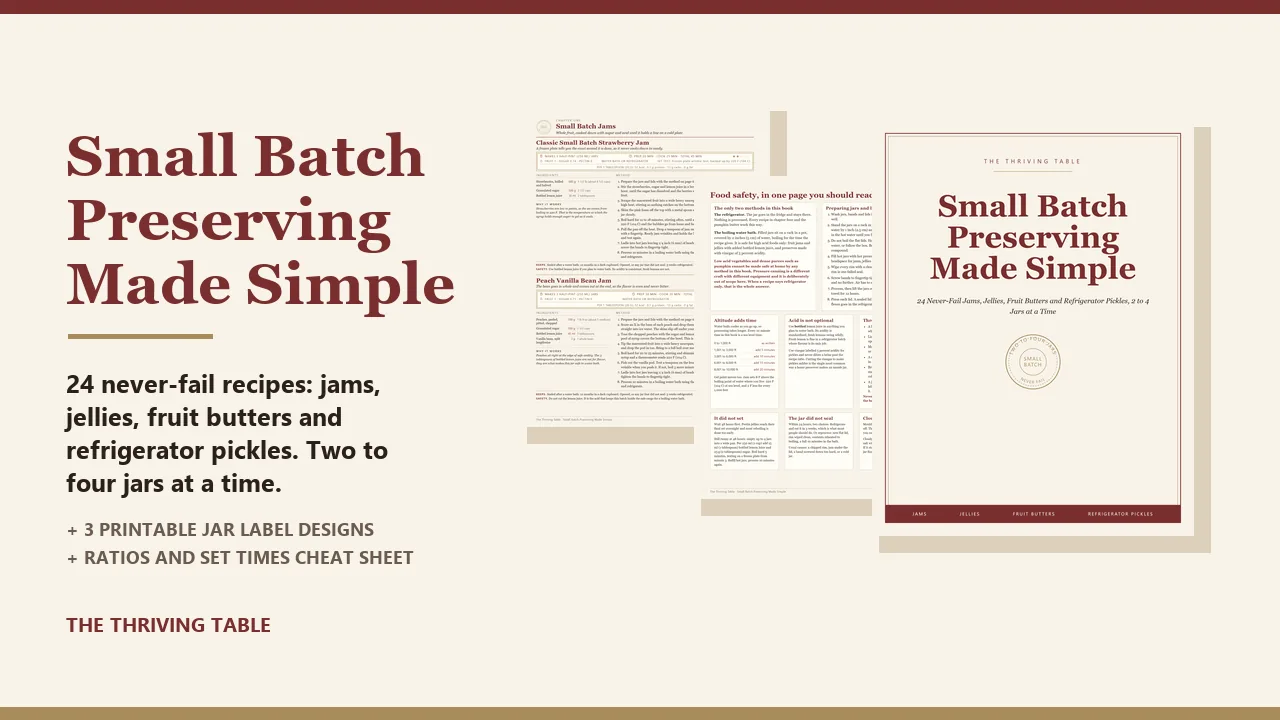
Small Batch Preserving Made Simple
Turn the fruit on your counter into jars people beg for, two to four at a time.
- 24 small batch recipes: 9 jams, 5 jellies, 4 fruit butters, 6 refrigerator pickles
- Exact fruit to sugar to pectin ratios in grams and cups
- The test that proves your jam has set
- 3 printable jar label designs, ready to gift
- Safe storage times on every single recipe
$11
Instant download: a 22-page PDF plus printable jar labels and a cheat sheet in US Letter and A4. Not what you hoped for? Email us within 30 days for a refund, per our Terms.
The peaches are ripe today. By Thursday they will not be. You could eat six, give a few away and watch the rest go soft. Or you could turn them into jars.
Most people skip preserving because it sounds like an all-day job with a stockpot, a rack and a lot of ways to get it wrong. Small batch is different. You make two to four jars, you use one saucepan, and every recipe tells you exactly when it is done.
What changes
You stop guessing. Each jam recipe gives you a temperature, a plate test and a boiling window. That is the difference between jam that sets and jam that runs off the toast. If you have ever had a batch fail at eleven at night, there is a page for that: why it did not set and how to fix it in the jar.
The ratios work beyond the book. Find your fruit's pectin level on the chart, take the matching ratio, use the matching test.
How it works
- Pick your fruit and your recipe. Use the chapters (jams, jellies, fruit butters or refrigerator pickles) or the one-page ratios chart for nine fruits.
- Cook to the number. Follow the temperature, the plate test and the boiling window. The apple butter finishes in about two hours instead of a full day. The fruit butter chapter is the only one where doneness is a look, so it has its own test.
- Label and store. Print the jar labels, stick them on and check the storage time on the recipe page.
What this is not
It is not a full canning encyclopedia. It is 22 pages, and it covers two methods only: refrigerator and water bath.
It is not a book with a dashboard or a recipe app. It is a PDF and printable sheets.
It is not a history of preserving. There are no forty pages of background. You get the recipes, the ratios, the safety page and the labels, ready to print and use this weekend.
What is inside
22-page ebook, 24 recipes
Jams, jellies, fruit butters and refrigerator pickles, each with a temperature, a plate test and a boiling window.
Jar Labels, 3 designs
Round lid labels and front labels in US Letter and A4, drawn in one ink so a black and white printer works.
Ratios and Set Times cheat sheet
9 fruits on one page, in US Letter and A4.
Food safety page
Two methods, an altitude table and the signs that mean discard.
Perfect for
- Anyone with seasonal fruit ripening faster than they can eat it
- Gift givers who want handmade jars that look store bought
- First time preservers who worry about doing it safely
Questions
Do I need a canner or special equipment?
No giant canner. The book uses two methods only, refrigerator and water bath, and is written for one saucepan and a scale. The refrigerator pickles need no equipment at all.
I am a beginner. Is this safe for me?
It is written for first time preservers. Every recipe has safe storage times, and there is a food safety page with the two methods, an altitude table and the signs that mean discard.
What if my jam does not set?
There is a page on why it happens and how to fix a batch that is already in the jar. The book also gives you the plate test that proves a set.
Can I use fruit that is not in the book?
Yes. The jam ratio chart works for other fruit: find its pectin level, take the matching ratio and use the matching test.
Can I print the labels on A4?
Yes. The jar labels and the cheat sheet come in both US Letter and A4.
Make this weekend's fruit last.
One saucepan, one scale and the ratios on one page. Print the labels and the jars are ready to give.
Free recipes from the same guide
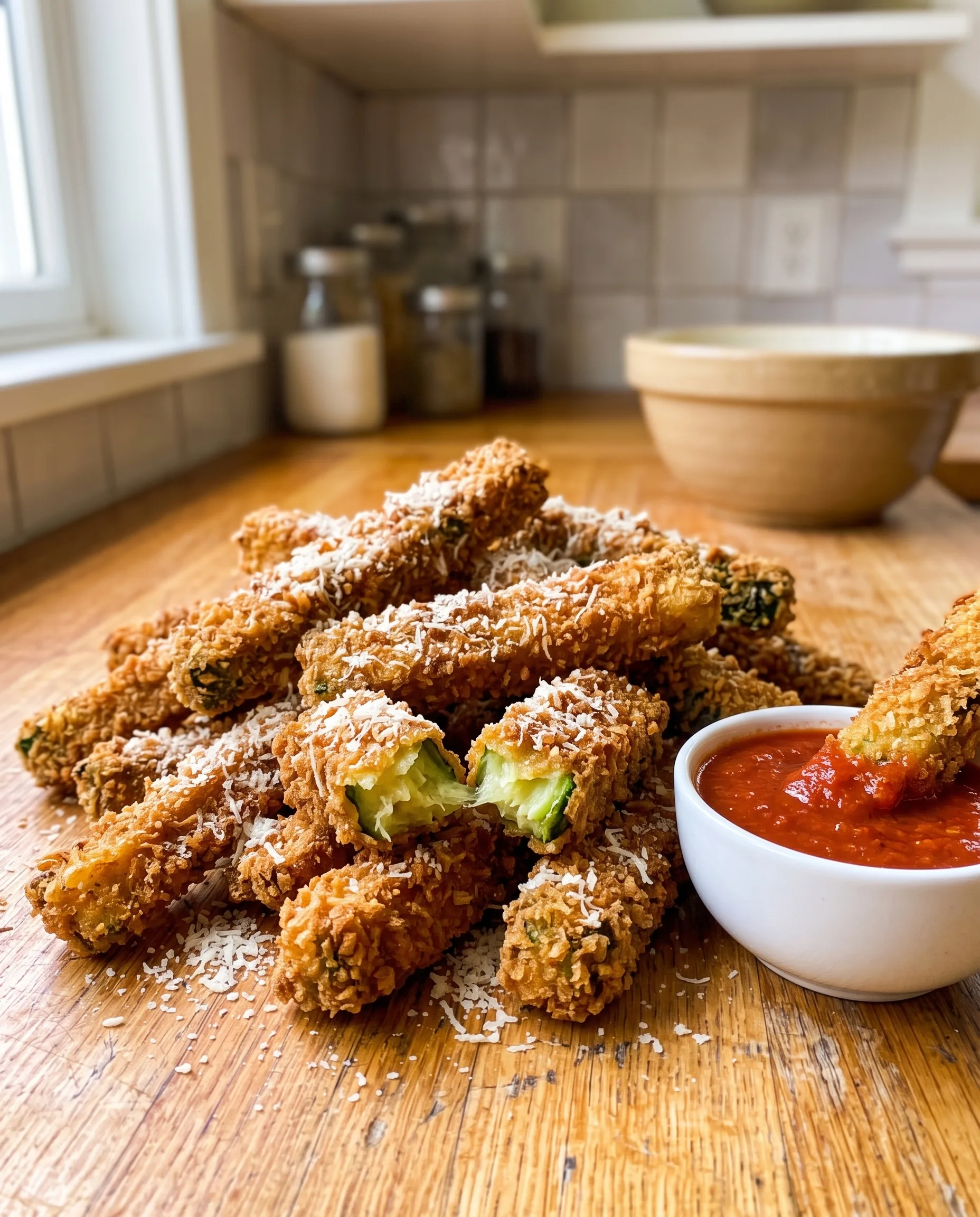
Baked Zucchini Fries: Crispy Panko and Parmesan Sticks
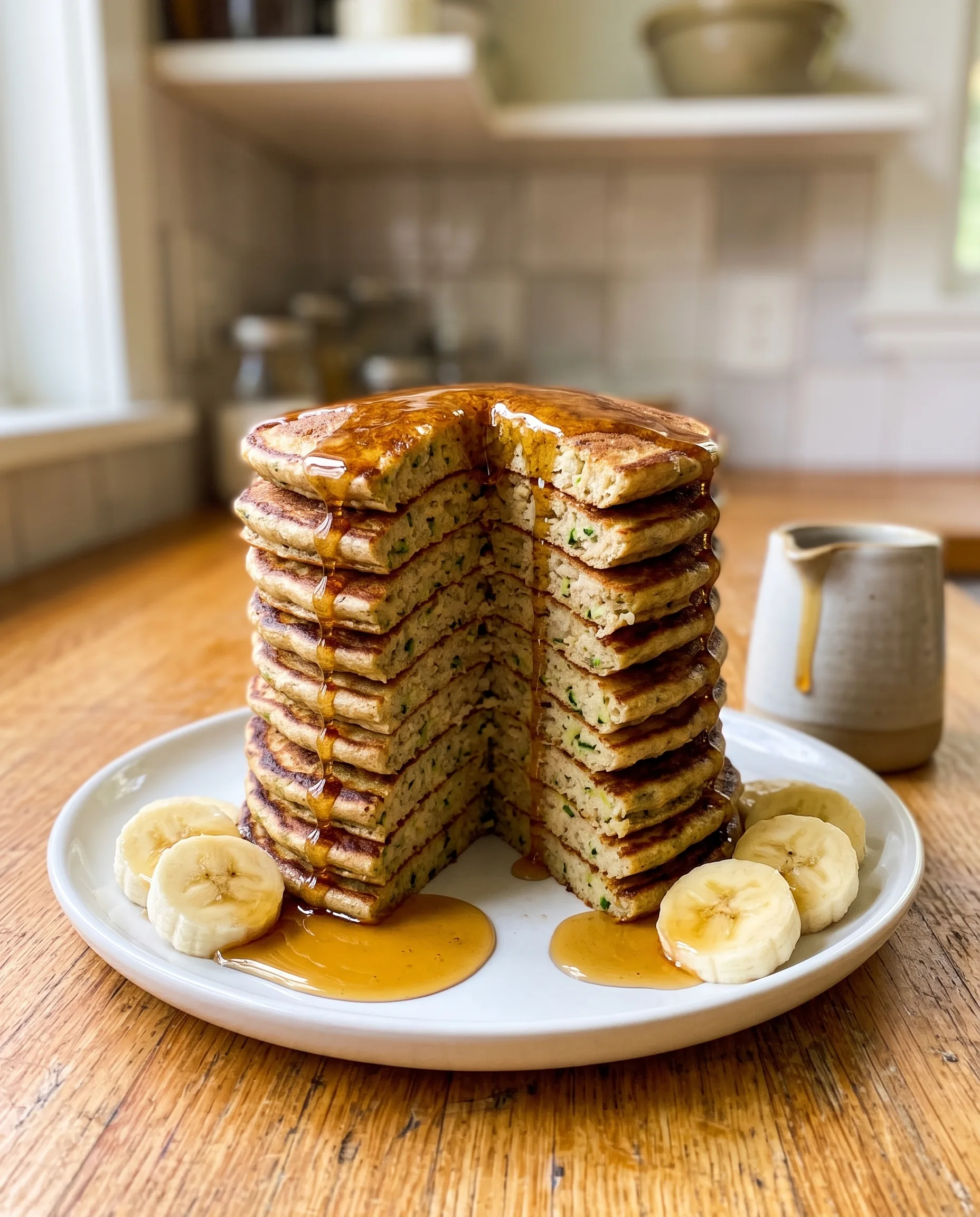
Banana Zucchini Pancakes (Makes 12, Ready in 35 Minutes)
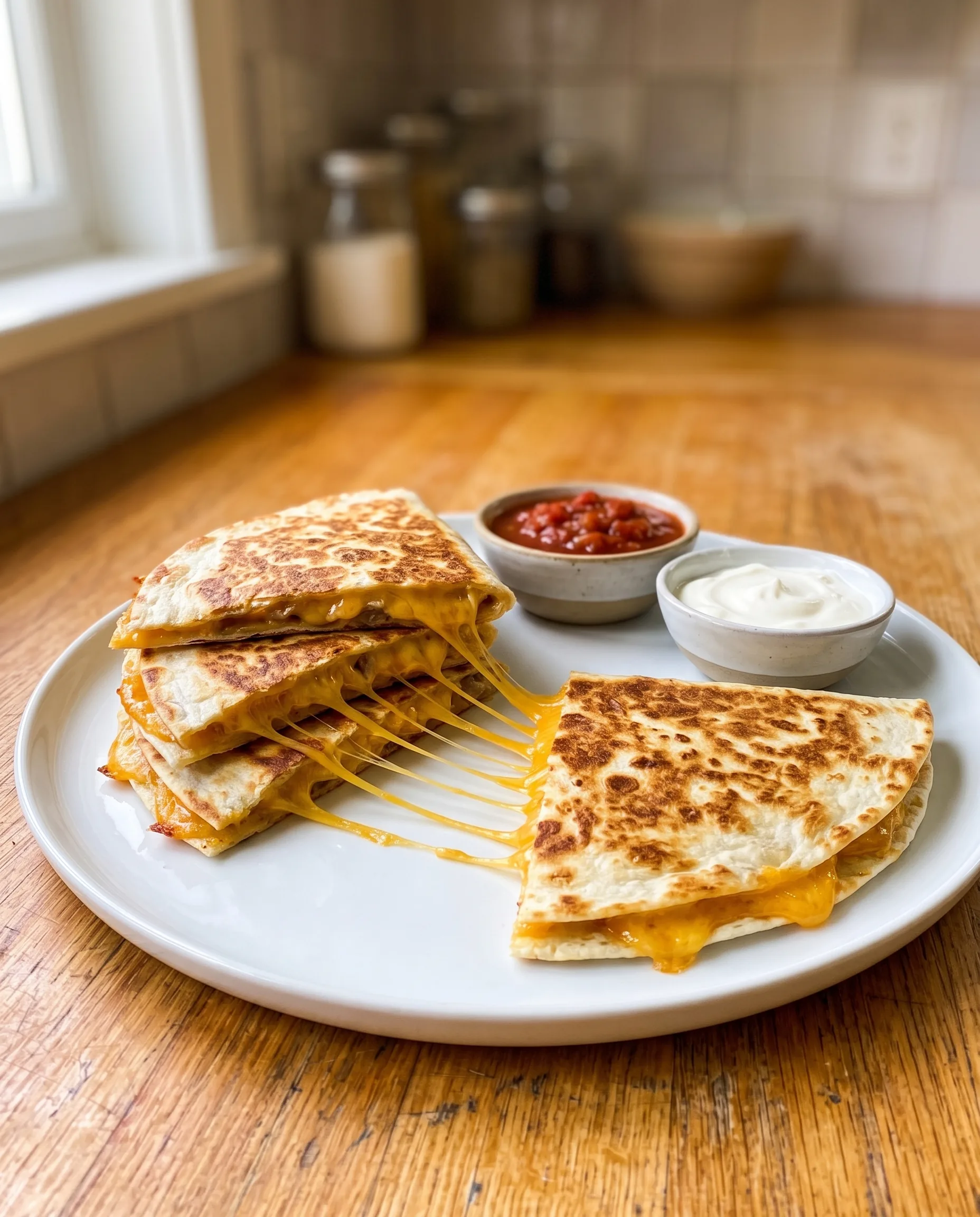
Cheese Zucchini Quesadillas (Ready in 31 Minutes)